

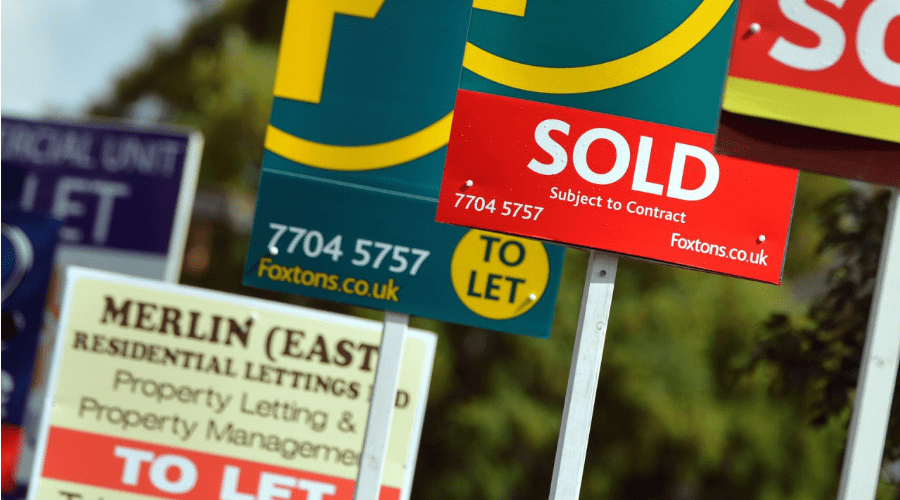
The north of England continues to be the UK’s most exciting prospect for property investors as London and the south continue to slow.
The Hometrack Index shows overall growth but with significant regional differences
In quarter one 2017, the Hometrack Index showed nationwide house price growth of 5.7% year-on-year and 2.5% quarter-on-quarter. Looking specifically at the 20 cities featured in its index, the figures were 6.4% year-on-year and 3.5% quarter-on-quarter. There were, however, substantial variations according to local markets, with the north of England performing much better than the south.
London and the south
While London, Cambridge and Oxford all showed house prices on an upward trend, it was a muted one with London only posting 4.9% year-on-year and 2.2% quarter-on-quarter. Oxford and Cambridge posted even less. Moving somewhat further away from the capital, Bournemouth, Bristol, Portsmouth and Southampton all managed to outperform London, with the top performer on an annual basis being Bristol (7.3%) and on a quarterly basis being Bournemouth (2.3%).
The north of England
Sheffield was the lowest-performing northern city on an annual basis, but still outperformed London with 5.7% growth. Leeds was the lowest-performing northern city on a quarterly basis, but only just fell short of matching London on 1.7% growth.
Leicester was the only other northern city to have lower quarterly growth than London, on 1.8%. The six other northern cities (Birmingham, Liverpool, Manchester, Newcastle, Nottingham and Sheffield) all outperformed London on both an annual and quarterly basis, in some cases quite spectacularly so. Manchester and Birmingham posted 8.8% and 8.0% year-on-year and 3.4% and 3.5% quarter-on-quarter respectively.
Scotland, Wales and NI
The Hometrack Index follows 3 cities in Scotland (Aberdeen, Edinburgh and Glasgow), plus Cardiff and Belfast. Out of all of these cities, only Aberdeen posted a reduction in house prices (-8.7% year-on-year and -6.2% quarter-on-quarter).
This is hardly a surprise given that Aberdeen’s local economy is heavily dependent on the oil industry and oil prices are currently very low. Hopefully working to build a more diversified economy will help to address this issue in the future. Belfast posted modest growth of 2.9% year-on-year and 0.5% quarter-on-quarter. This is still encouraging given that Belfast is arguably second only to London in terms of its jitteriness about the prospect of Brexit. Cardiff, Edinburgh and Glasgow, however, are all powering ahead, with Edinburgh doing particularly well at 7.1% year-on-year and 4.5% quarter-on-quarter.
Overall
The fact that house price growth is continuing is encouraging and it is hardly a surprise that at this point in time, the best potential for growth is outside of the London area and indeed generally more to the north than to the south.
The Northern Powerhouse initiative has been very successful and there is currently nothing to suggest that any government would abandon it and even if they did, at this point, the further development of the north of England could probably continue on its own steam. It’s also worth noting that the Hometrack Index only covers a selection of northern cities with others also offering exciting prospects, Salford, Hull and Derby all spring to mind in this regard.
Author Bio
Hopwood House are property investment specialists, with a large portfolio of UK property investments in the student property, buy-to-let and commercial property markets.
Sign up for regular property updates & receive investments in your inbox

Daniel Peacock